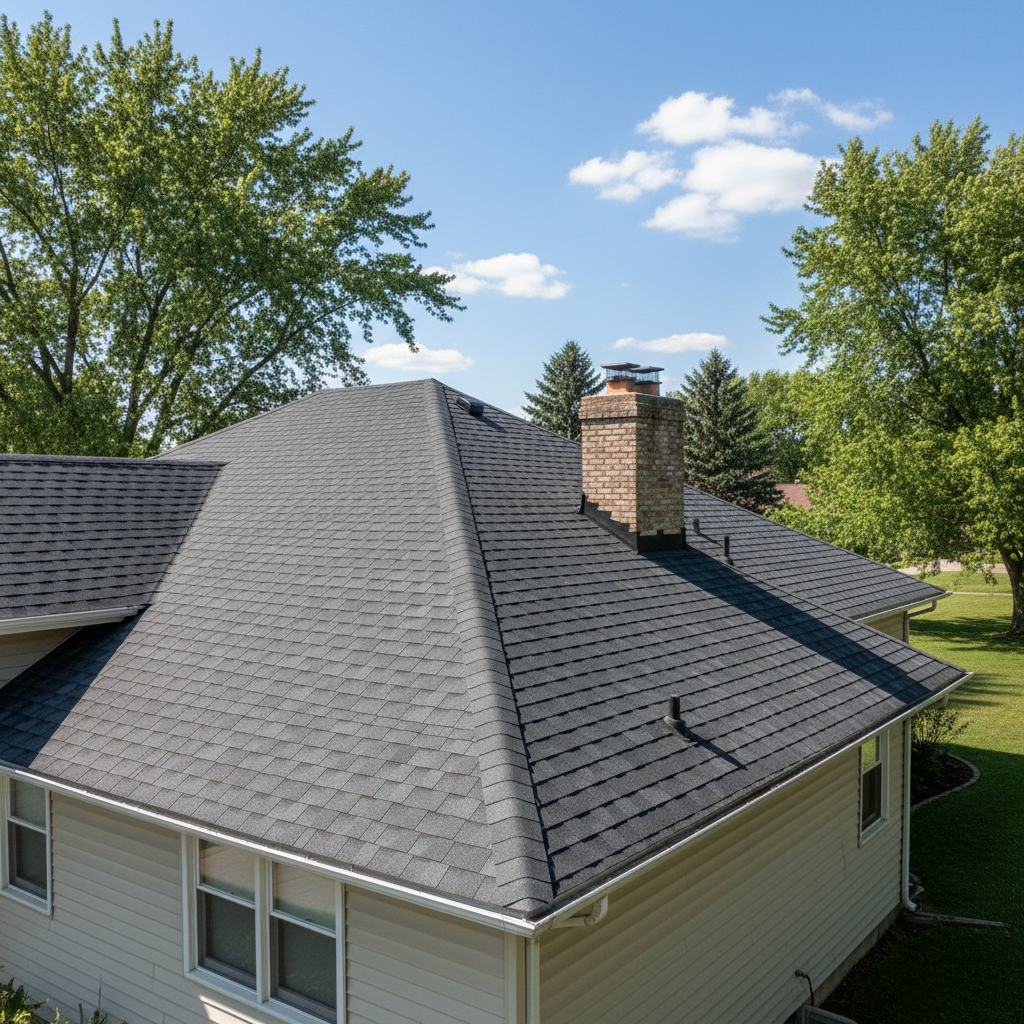
When you look up at your roof after a heavy summer storm roll across Platte County, you might wonder how it is holding up. Here in Columbus, Nebraska, our asphalt shingle roofs take a serious beating. Between freezing winter freezes, heavy snow loads, blistering summer sun, and sudden high winds, your shingles work hard year-round. If you want to squeeze every last year of life out of your roof, you cannot just ignore it until water drips through your ceiling.
Extending the lifespan of an asphalt shingle roof comes down to managing moisture and thermal shock. Nebraska temperature swings are wild, because it can be freezing one day and warm enough to melt snow the next. That expansion and contraction causes stress. Charis Roofing Inc always tells homeowners that keeping your attic properly ventilated is half the battle. Good airflow prevents heat from trapping under the roof deck, which bakes your shingles from the underside and ruins them prematurely. It also stops ice dams from forming along your eaves during our heavy winter months.
Regular maintenance does not have to be a massive weekend chore, but it does require consistency. Here is what you should actually be doing:
- Clearing leaves and debris out of your gutters twice a year so water never backs up under your starter shingles.
- Checking your attic space after major storms for daylight or damp insulation.
- Walking the perimeter of your house to look for loose or missing granules washing down your downspouts.
- Trimming back tree branches that scrape against your shingles during high winds.
Ignoring warning signs will cost you plenty down the line. You need to keep an eye out for curling shingle edges, bald spots where the granules have completely worn away, and cracked rubber boots around your plumbing vents. If you notice flashing pulling away around your chimney or valleys, water is finding an easy path inside your home.
Some jobs are fine for a handy homeowner with a sturdy ladder, but knowing when to call a professional keeps you safe and saves your wallet. If your roof is getting close to that twenty-year mark, or if you spot widespread damage after a hailstorm, get a local pro out to take a look. Catching a small flashing leak or replacing a section of wind-ripped shingles early prevents minor issues from turning into a full-scale roof replacement.